
jueves, 22 de octubre de 2026

miércoles, 21 de octubre de 2026

martes, 20 de octubre de 2026

lunes, 19 de octubre de 2026
El derecho a ofenderse
Un artículo del verano de 2014, reloaded:
_____. "El derecho a ofenderse." Academia 28 May 2016.*
https://www.academia.edu/25674364/
2016
Se trata de un análisis conceptual de la tolerancia y de la intolerancia, del derecho a ofender y a recibir ofensas, en el seno de una sociedad abierta y multicultural, al hilo de un comentario de David Lane sobre el teatro controvertido y la corrección política en Contemporary British Drama (2010).
_______________________________________________________________________________________
English abstract: THE RIGHT TO TAKE AND GIVE OFFENCE. A conceptual analysis of toleration and intolerance, of the right to give and receive offence, within an open and multicultural society. This is done by way of a response to David Lane's comment on controversial drama and political correctness in Contemporary British Drama (2010).
También en SSRN y otro sitios:
García Landa, José Angel. "El derecho a ofenderse (The Right to Take and Give Offence)." SSRN 16 Jan. 2015.*
https://ssrn.com/abstract=2550428
2015
Legal Anthropology eJournal 16 Jan. 2015.*
http://www.ssrn.com/link/Legal-Anthropology.html
2015
Political Anthropology eJournal 16 Jan. 2015.*
http://www.ssrn.com/link/Political-Anthropology.html
2015
Conflict Studies: Intra-State Conflict eJournal 16 Jan. 2015.*
http://www.ssrn.com/link/Conflict-Studies-Intra-State-Conflict.html
2015
Conflict Studies: Domestic Politics eJournal 16 Jan. 2015.*
http://www.ssrn.com/link/Conflict-Studies-Domestic-Politics.html
2015
Political Institutions: Constitutions eJournal 16 Jan. 2015.*
http://www.ssrn.com/link/PI-Constitutions.html
2015
Political Theory: Political Philosophy eJournal 16 Jan. 2015.*
http://www.ssrn.com/link/PT-Political-Philosophy.html
2015
Social & Political Philosophy eJournal 16 Jan. 2015.
http://www.ssrn.com/link/Social-Political-Philosophy.html
2015
domingo, 18 de octubre de 2026

miércoles, 14 de octubre de 2026


martes, 13 de octubre de 2026

lunes, 12 de octubre de 2026
viernes, 9 de octubre de 2026
Paying Attention to Attention
An AI audio introduction, credits due to Academia, to my paper "Atención a la Atención: Sociobiología, Estética y Pragmática de la Atención" ("Paying Attention to Attention: Sociobiology, Aesthetics, and Pragmatics of Attention"). - After an examination of some recent theories on the concept of attention developed in the fields of evolutionary theory, sociobiology and cognitivism, in particular human modes of attention linked to language and social interaction, this paper expounds their relevance in order to reformulate some central issues in the fields of literary interpretation and critical theory.
_____. "Paying Attention to Attention: Sociobiology, Aesthetics, and Pragmatics of Attention." AI podcast on José Angel García Landa's paper "Atención a la atención: Sociobiología, estética y pragmática de la atención." Academia 9 Oct. 2026.*
https://www.academia.edu/8048155/
2026
jueves, 8 de octubre de 2026

García Lorca en Jaca
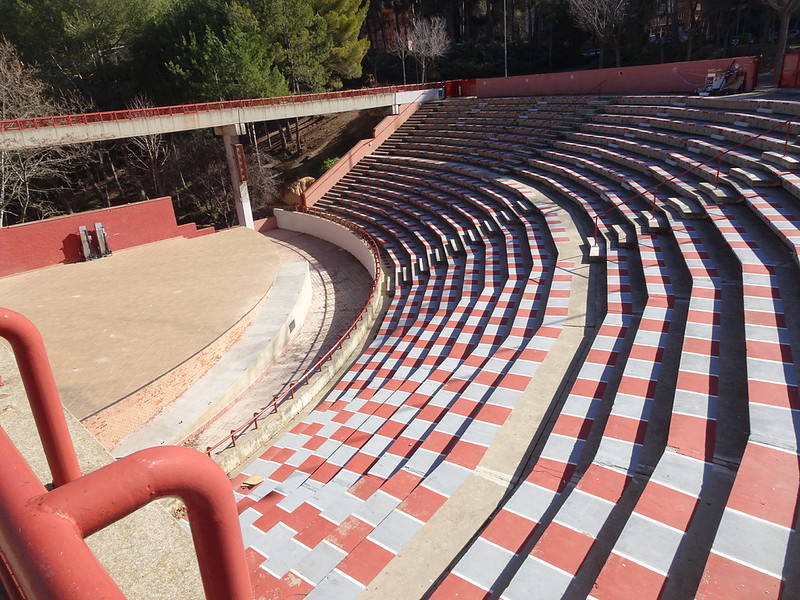
Monserrat, Daniel. "El día en el que Lorca casi provoca un problema de orden público en Jaca con La Barraca: las dos versiones de lo que sucedió. La compañía tenía previsto representar ‘Fuenteovejuna’ en el Teatro Unión Jaquesa el 25 de agosto de 1933." El Periódico de Aragón 6 Oct. 2026.*
2026
miércoles, 7 de octubre de 2026

martes, 6 de octubre de 2026

lunes, 5 de octubre de 2026
A Malignant and a Turband Turke
Retropost, 2006:
a Malignant and a Turband Turke
La revista Shakespeare, publicada por Routledge, pide contribuciones para un número especial sobre Shakespeare
y el Islam... No es que piense contribuir, porque bien habrá que
exprimir las meninges para decir algo que valga la pena decir sobre el
tema. Shakespeare, desde luego, no se caracteriza por su pensamiento
profundo o refinado sobre el Islam. (Ni yo). Hay pocos musulmanes en
Shakespeare en realidad, y pocas más alusiones a ellos. Sí hay bastantes
Moros—whatever that means. Empezando por el moro de Venecia, claro, un moro atípico donde los haya. Ya hubo un ciclo especial de Shakespeare and Islam en 2004, en el cuatricentenario de Othello. (También está Aaron el Moro, en Tito Andrónico; éste ateo y ubicado en época prerromana... hay una morita a quien un criado deja preñada en El Mercader de Venecia... Y
en la misma obra está el Príncipe de Marruecos, negro y moro como Otelo
pero seguramente musulmán... y ridiculizado y rechazado por su
Desdémona... como el Príncipe de Aragón, por otra parte).
El Moro de Venecia no puede ser musulmán (ver aquí una discusión en la lista Shakspere). Es, por tanto, un converso; seguramente convertido al ser rescatado de sus penalidades, aquellas que narraba de modo tan conmovedor a Desdémona para seducirla. Poco sabemos en realidad de su historia anterior: aunque vuelve a aludir a un episodio retrospectivo en su penúltimo parlamento, en el que resume su historia y su error, y pide ser recordado no sólo por su crimen, sino también por su arrepentimiento:
one whose subdued eyes,
Albeit unused to the melting mood,
Drops tears as fast as the Arabian trees
Their medicinal gum; set you down this,
And say besides, that in Aleppo once,
Where a malignant and a turban’d Turk
Beat a Venetian, and traduc’d the state,
I took by the throat the circumcised dog,
and smote him thus. [Stabs himself.
Otelo es el mayor clásico sobre "compañeros sentimentales" en el mal sentido del término; modelo para recientes viudos parricidas, se suicida tras su crimen. Pero sus palabras son reveladoras. Se maldice a sí mismo, pero elige hacerlo en tanto que musulmán. Otelo no tiene en común la "raza" con el turco: un "Moro", ya sea en sentido propio o ya sea un africano negro, no es en absoluto lo mismo que un arquetípico y enturbantado turco; su parecido más obvio es que ambos son musulmanes. Para David Basch, Othello
is characterized as a Moslem convert, another factor of his "otherness" within his society.
In Othello’s last speech, he alludes to his own circumcision as a former Muslim as he notes his seizing of "the circumcised dog" in Aleppo and smiting him "thus." In the play, he in fact smites himself at that moment, being rescuer and evil perpetrator at one and the same time. As Florence Amit observed, even Othello’s name, when parsed into syllables and understood as Hebrew, declares literally, "his sign of God," which in a Jewish-Hebrew context refers to his circumcision, which is "the sign of God."
Of course, there is no judgmental statement by Shakespeare here about Muslims, just the words of a particular man, Othello, responding to his
unique situation marvelously in character.
El
segundo párrafo es muy acertado: el tercero es sólo políticamente
correcto. Otelo revive lo que fue al parecer un momento decisivo en su
historia: cuando eligió de modo
heroico el bando adecuado (para Shakespeare) defendiendo al débil y
cristiano, frente a un turco opresor, quizás todavía de su misma
religión, prepotente, insultante, es más, ofensivamente enturbantado, un
turco con turbante. En el
memorable parlamento de Otelo, convergen la autoabyección suicida del
asesino "de género" con la autoabyección del converso que se castiga a
sí mismo al descubrir que todavía sigue siendo aquello que era, aquello
que ha aprendido a odiar. No es sorprendente que ni negros ni musulmanes
estén satisfechos con la imagen que Shakespeare proyecta de ellos en la
figura de Otelo (¡aunque no sepamos si éste es negro o musulmán!). En
las palabras de Otelo queda maravillosamente expresada, de modo certero y
dramático, la ira justiciera e hiperpapista del converso, el odio a sí
mismo del criminal arrepentido, y la victimización internalizada del
chivo expiatorio perteneciente a una minoría étnica. Otelo por fin
confiesa su indignidad (que todos habían predicho y él ha demostrado), y
también la expresa con una imagen de exotismo y eurocentrismo
paternalista, comparándose a "the base Indian" (con lo cual pueden
sumarse los indios al coro de abucheos a un tembloroso y acorralado
Shake-Speare). Las palabras de Otelo son indecidibles: no puede saberse
si se castiga a sí mismo sabiendo que es circunciso
o si tal es el grado de autoabyección a que ha llegado, que utiliza el
término "circumcised dog" sin siquiera ser consciente de que lo está
castigando en sí mismo, convirtiéndose en el turco que esta vez mata al
turco (o al cristiano, una vez más). Es un juego de palabras y de
acciones que nos lleva a un indecidible regressus in infinitum, y
expresa, y hace, el carácter y destino de Otelo. Ni siquiera el suicidio
súbito, también traumático, de Caché, crea
un momento de intensidad teatral semejante, con este paso súbito de la
narración y el pasado a la teatralidad y el presente, superpuestos
violentamente. ¿Regresa Otelo a su pasado, o nunca ha salido de él? A malignant, and a Turbond-Turke...
También la relación entre la malignidad y el turbante es indecidible,
ambivalente, y puramente shakespeareana en ese sentido. El turbante,
signo del Islam, ¿necesita la "malignidad" del adjetivo para modificar o
aclarar su significado? ¿O es "Turbond" (always already) un sinónimo de "Malignant"? Las dos cosas, en Shakespeare.
Pero no nos deja aquí Otelo. Aún tiene tiempo de arrastrarse a la cama de la que fue Julieta en esta Verona del Mediterráneo, habitada por cristianos capuletos y montescos enturbantados... y muere con un beso, como Romeo. Y también aquí tenemos una escena ambivalente, indecidible (o decidible en una representación concreta, poniendo algún tipo de énfasis). Es un homenaje a lo que pudo haber sido, Otelo como Romeo—utilizando ecos visuales y verbales, intertextualizándose el autor o el personaje; pero es a la vez una parodia grotesca en la que Shakespeare dirige la energía intertextual de su propia obra anterior en otra dirección: pues a Julieta no la mató Romeo, ni Romeo era un oscuro musulmán. Otelo, o el musulmán como arquetipo del patriarcado violento, que sale como un Mister Hyde de dentro de sí para darse muerte, a sí mismo y a su breve idilio con Occidente.
Claro que ahí esta Yago para cuidar de que salga a la luz el Lado Oscuro...
viernes, 2 de octubre de 2026
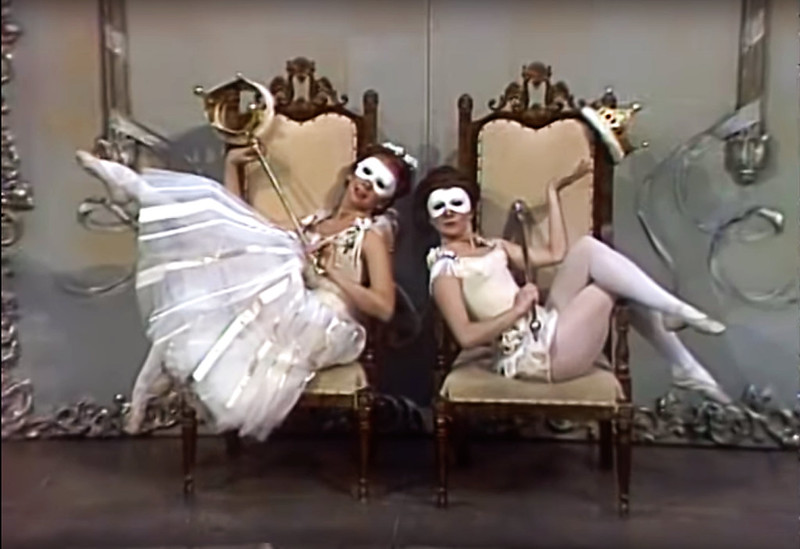
Amadeus - Queen of the Night
One of Mozart’s most famous operatic moments came to the big screen in the 1984 film Amadeus, when the “Queen of the Night” aria rang out with striking intensity under the direction of Miloš Forman. pic.twitter.com/S7hN0NaLnM
— 𝗖𝗹𝗮𝘀𝘀𝗶𝗰𝗮𝗹 𝗠𝗲𝗹𝗼𝗱𝗶𝗲𝘀 (@Old_But_Gold50s) October 1, 2026
Suscribirse a:
Entradas (Atom)
-
Freud ante la esfinge: Profecías autocumplidas, interpretaciones autointerpretables https://www.academia.edu/63138559/
-
Monserrat, Daniel. "El día en el que Lorca casi provoca un problema de orden público en Jaca con La Barraca: las...
