Mostrando entradas con la etiqueta Reyes. Mostrar todas las entradas

lunes, 19 de enero de 2026

Enriques Quintos y la guerra de agresión

 Retropost, 2006:

Enriques Quintos y la guerra de agresión
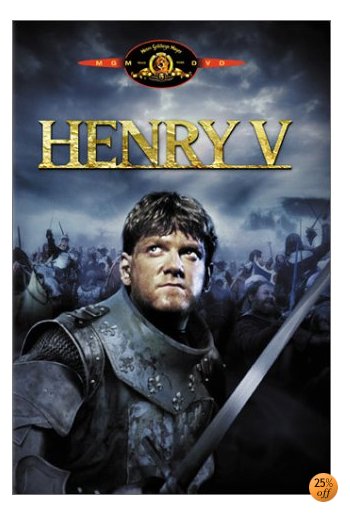
Enriques Quintos y la guerra de agresión

Me llega por fin el libro Books in Motion: Adaptation, Intertextuality, Authorship, editado por Mireia Aragay (Amsterdam y Nueva York: Rodopi, 2005) , en el que aparece un capítulo mío sobre las adaptaciones cinematográficas de Enrique V de Shakespeare, "Adaptation, Appropriation, Retroaction: Symbolic Interaction with Henry V". Traduzco el abstract:

Este capítulo enfoca la adaptación desde una perspectiva hermenéutica, específicamente una hermenéutica post-estructuralista del discurso, informada por el interaccionalismo simbólico. La relación intertextual entre un producto cultural (por ejemplo una obra teatral) y su adaptación o adaptaciones a la pantalla se analiza como una intervención realizativa sobre una formación discursiva preexistente, que incluye tanto el producto o texto original como los discursos que lo usan, se originan en él, derivan de él o lo rodean. Esta intervención es tanto una interpretación como una apropiación del texto original. Como otras modalidades intertextuales (traducciones, lecturas críticas) , las adaptaciones producen una transformación retroactiva del original, no en sí mismo, sino más bien en tanto que es usado y comprendido en contextos específicos de interacción comunicativa. Estas cuestiones teóricas se exploran con atención especial a las adaptaciones cinematográficas shakespeareanas, en concreto las principales películas sobre Henry V, la de Laurence Olivier (1944) y la de Kenneth Branagh (1989) y el tratamiento que dan a la violencia y la guerra en contextos diversos. Se propone una perspectiva "resistente" sobre las adaptaciones shakespeareanas.

Y éste es el final del artículo:

Quizá sea una lástima que la dinámica del patriotismo agresivo parece ser un arma de dos filos, y que en ausencia de un Hitler que corresponda al Pétain encarnado por el rey francés [en la película Henry V de Laurence Olivier], Henry resulte encarnar hasta cierto punto tanto la justicia agresiva de los Aliados como la locura agresiva de los nazis — una lectura de la obra que ciertamente no sería en modo alguno apreciada por Olivier.

Tras una escena tipo "Kiss me Kate" que extrae cierta energía intertextual de La fierecilla domada del propio Shakespeare, un Henry muy pagado de sí se dirige a la princesa Catherine, personificación de la Francia conquistada, como sigue: "Te diré en voz alta, ’Inglaterra es tuya, Irlanda es tuya, Francia es tuya (...)". La alusión a Irlanda entre Francia e Inglaterra es reveladora. El paralelo simbólico de Henry para el propio Shakespeare era el conde de Essex, objeto de una rara alusión a la política contempránea por parte de Shakespeare. A Essex, a quien la obra imagina "volviendo de Irlanda, / trayendo a la Rebelíón ensartada en su espada" (5.0), le pararon los pies los rebeldes irlandeses poco después de la representación de la obra de Shakespeare — sería el primer paso en el camino de Essex hacia el cadalso, an unworthier scaffold. No es sorprendente que tanto el Quarto de Henry V publicado en 1600 como la película de Olivier (y, quizá con más razón, la de Kenneth Branagh, irlandés de origen) evitan cualquier alusión a Essex o a los rebeldes irlandeses — aunque estos elementos problemáticos de la obra de Shakespeare habrían de ser, precisamente, los que atrajesen la atención de una adaptación que quisiese entrar a tratar con la obra a fondo, en lugar de esterilizarla, o de utilizarla para preparar papillas patrióticas.

Un análisis de las reacciones críticas subsiguientes a Henry V no debe perder de vista ni los contextos de producción originales de la obra y de las películas, ni tampoco el contexto actual de la discusión crítica, que una vez más no permite que la cuestión de la guerra de agresión se pase por alto. Testimonio da de eso, en el caso presente, que mientras este volumen estaba en preparación, tanto Gran Bretaña como España estaban apoyando activamente una política estadounidense de guerra agresiva e invasión, con final abierto, contra "el enemigo invisible", una guerra que naturalmente arrastra consigo su buena medida de tinta de calamar retórica, manipulaciones de los hechos, e intereses inmencionables. El giro que se ha producido este año [2004] hacia un orden internacional basado en el poder y su derecho a la agresión, en lugar del derecho a no sufrir agresión, es notable; quizá lo sea aún más en los países en los que ya ha costado muchas vidas. Y es una cuestión que no se puede ignorar, pues es el trasfondo de cualquier contexto en el que podamos decidir hoy qué estamos tratando.

Un enfoque crítico que sea consciente del tratamiento que dan a la ideología de la violencia los iconos culturales (o, lo que es lo mismo, un enfoque crítico que quiera llamar la atención sobre esta cuestión) tomará nota de los énfasis ideológicos, las omisiones y las elecciones que emergen en la dinámica intertextual e interaccional de la producción de significado, ya sea a través de la adaptación o a través de las lecturas críticas. Los énfasis, omisiones, y elecciones ideológicas de nuestra propia perspectiva emergen para otros, y a otros corresponde el señalarlos. Terminaré adaptando la frase de T. S. Eliot, sosteniendo que el destino de toda apropriación es ser apropiada de nuevo. O, por decirlo de otra manera: nunca te fíes del narrador, fíate de la historia. Pero no de la historia que te han contado: fíate de la historia completa.


7 comentarios

María Teresa Martínez -

José: Estoy haciendo un posgrado y deseo si es posible me envíes por este medio el capítulo del que aparece el abstract - en castellano - Soy Argentina y es obvio que les tengo asco al inglés - Muchas Gracias

José Angel -

Je, acabo de caer en la cuenta de que tienes que sufrir lo tuyo, Magda, con el Spanglish que produzco a veces. Pero mira el lado bueno, es también una masacre del inglés (aparte de la más evidente masacre del español).

JoseAngel -

Nada, Magda, tú piensa que es el idioma de Oscar Wilde, por ejemplo, o de Joyce... Gracias, y no dudes que si produzco algo digno de ser leído te lo paso, un abrazo.

Magda -

Pues cuando tengas sobre estos temas en español me encantaría leerlos. Debo confesarte que le tengo mucho rechazo al inglés (paranoias, quizá ;) ).

Magda -

Pues cuando tengas sobre estos temas en español me encantaría leerlos. Debo confesarte que le tengo mucho rechazo al inglés (paranoias, quizá ;) ).

Saludos, José Ángel.

JoseAngel -

Gracias, Magda. Lo cierto es que tengo una especie de síndrome Doctor Jekyll y Mister Hyde con esto de los idiomas, muy rara vez me traduzco algo de un idioma a otro. Je, no tengo paciencia, me entran ganas de cambiar cosas conforme traduzco...

Magda -

¡Que bien, José Ángel! ¿no lo has publicado en español?

domingo, 11 de diciembre de 2022

The Deposition Scene


From William Shakespeare's Richard II (IV.1)

(King Richard is being deposed by the rebel Henry Bolinbroke, thereafter Henry IV)

  BOLINGBROKE. Fetch hither Richard, that in common view
    He may surrender; so we shall proceed
    Without suspicion.

  YORK. I will be his conduct. Exit

  BOLINGBROKE. Lords, you that here are under our arrest,
    Procure your sureties for your days of answer.
    Little are we beholding to your love,
    And little look'd for at your helping hands.

      Re-enter YORK, with KING RICHARD, and OFFICERS  bearing the regalia

  KING RICHARD. Alack, why am I sent for to a king,
    Before I have shook off the regal thoughts
    Wherewith I reign'd? I hardly yet have learn'd
    To insinuate, flatter, bow, and bend my knee.
    Give sorrow leave awhile to tutor me
    To this submission. Yet I well remember
    The favours of these men. Were they not mine?
    Did they not sometime cry 'All hail!' to me?
    So Judas did to Christ; but he, in twelve,
    Found truth in all but one; I, in twelve thousand, none.
    God save the King! Will no man say amen?
    Am I both priest and clerk? Well then, amen.
    God save the King! although I be not he;
    And yet, amen, if heaven do think him me.
    To do what service am I sent for hither?

  YORK. To do that office of thine own good will
    Which tired majesty did make thee offer—
    The resignation of thy state and crown
    To Henry Bolingbroke.

  KING RICHARD. Give me the crown. Here, cousin, seize the crown.
    Here, cousin,
    On this side my hand, and on that side thine.
    Now is this golden crown like a deep well
    That owes two buckets, filling one another;
    The emptier ever dancing in the air,
    The other down, unseen, and full of water.
    That bucket down and full of tears am I,
    Drinking my griefs, whilst you mount up on high.

  BOLINGBROKE. I thought you had been willing to resign.

  KING RICHARD. My crown I am; but still my griefs are mine.
    You may my glories and my state depose,
    But not my griefs; still am I king of those.

  BOLINGBROKE. Part of your cares you give me with your crown.

 KING RICHARD. Your cares set up do not pluck my cares down.
    My care is loss of care, by old care done;
    Your care is gain of care, by new care won.
    The cares I give I have, though given away;
    They tend the crown, yet still with me they stay.

  BOLINGBROKE. Are you contented to resign the crown?

  KING RICHARD. Ay, no; no, ay; for I must nothing be;
    Therefore no no, for I resign to thee.
    Now mark me how I will undo myself:
    I give this heavy weight from off my head,
    And this unwieldy sceptre from my hand,
    The pride of kingly sway from out my heart;
    With mine own tears I wash away my balm,
    With mine own hands I give away my crown,
    With mine own tongue deny my sacred state,
    With mine own breath release all duteous oaths;
    All pomp and majesty I do forswear;
    My manors, rents, revenues, I forgo;
    My acts, decrees, and statutes, I deny.
    God pardon all oaths that are broke to me!
    God keep all vows unbroke are made to thee!
    Make me, that nothing have, with nothing griev'd,
    And thou with all pleas'd, that hast an achiev'd.
    Long mayst thou live in Richard's seat to sit,
    And soon lie Richard in an earthly pit.
    God save King Henry, unking'd Richard says,
    And send him many years of sunshine days!
    What more remains?

  NORTHUMBERLAND. No more; but that you read
    These accusations, and these grievous crimes
    Committed by your person and your followers
    Against the state and profit of this land;
    That, by confessing them, the souls of men
    May deem that you are worthily depos'd.

  KING RICHARD. Must I do so? And must I ravel out
    My weav'd-up follies? Gentle Northumberland,
    If thy offences were upon record,
    Would it not shame thee in so fair a troop
    To read a lecture of them? If thou wouldst,
    There shouldst thou find one heinous article,
    Containing the deposing of a king
    And cracking the strong warrant of an oath,
    Mark'd with a blot, damn'd in the book of heaven.
    Nay, all of you that stand and look upon me
    Whilst that my wretchedness doth bait myself,
    Though some of you, with Pilate, wash your hands,
    Showing an outward pity—yet you Pilates
    Have here deliver'd me to my sour cross,
    And water cannot wash away your sin.

NORTHUMBERLAND. My lord, dispatch; read o'er these
    articles.

  KING RICHARD. Mine eyes are full of tears; I cannot see.
    And yet salt water blinds them not so much
    But they can see a sort of traitors here.
    Nay, if I turn mine eyes upon myself,
    I find myself a traitor with the rest;
    For I have given here my soul's consent
    T'undeck the pompous body of a king;
    Made glory base, and sovereignty a slave,
    Proud majesty a subject, state a peasant.

  NORTHUMBERLAND. My lord-

  KING RICHARD. No lord of thine, thou haught insulting man,
    Nor no man's lord; I have no name, no tide-
    No, not that name was given me at the font-
    But 'tis usurp'd. Alack the heavy day,
    That I have worn so many winters out,
    And know not now what name to call myself!
    O that I were a mockery king of snow,
    Standing before the sun of Bolingbroke
    To melt myself away in water drops!
    Good king, great king, and yet not greatly good,
    An if my word be sterling yet in England,
    Let it command a mirror hither straight,
    That it may show me what a face I have
    Since it is bankrupt of his majesty.

  BOLINGBROKE. Go some of you and fetch a looking-glass.

 Exit an attendant

  NORTHUMBERLAND. Read o'er this paper while the glass doth come.

  KING RICHARD. Fiend, thou torments me ere I come to hell.

  BOLINGBROKE. Urge it no more, my Lord Northumberland.

  NORTHUMBERLAND. The Commons will not, then, be satisfied.

  KING RICHARD. They shall be satisfied. I'll read enough,
    When I do see the very book indeed
    Where all my sins are writ, and that's myself.

Re-enter attendant with glass

    Give me that glass, and therein will I read.
    No deeper wrinkles yet? Hath sorrow struck
    So many blows upon this face of mine
    And made no deeper wounds? O flatt'ring glass,
    Like to my followers in prosperity,
    Thou dost beguile me! Was this face the face
    That every day under his household roof
    Did keep ten thousand men? Was this the face
    That like the sun did make beholders wink?
    Is this the face which fac'd so many follies
    That was at last out-fac'd by Bolingbroke?
    A brittle glory shineth in this face;
    As brittle as the glory is the face;

  [Dashes the glass against the ground]

    For there it is, crack'd in a hundred shivers.
    Mark, silent king, the moral of this sport—
    How soon my sorrow hath destroy'd my face.

BOLINGBROKE. The shadow of your sorrow hath destroy'd
    The shadow of your face.

  KING RICHARD. Say that again.
    The shadow of my sorrow? Ha! let's see.
    'Tis very true: my grief lies all within;
    And these external manner of laments
    Are merely shadows to the unseen grief
    That swells with silence in the tortur'd soul.
    There lies the substance; and I thank thee, king,
    For thy great bounty, that not only giv'st
    Me cause to wail, but teachest me the way
    How to lament the cause. I'll beg one boon,
    And then be gone and trouble you no more.
    Shall I obtain it?

  BOLINGBROKE. Name it, fair cousin.

  KING RICHARD. Fair cousin! I am greater than a king;
    For when I was a king, my flatterers
    Were then but subjects; being now a subject,
    I have a king here to my flatterer.
    Being so great, I have no need to beg.

  BOLINGBROKE. Yet ask.

  KING RICHARD. And shall I have?

  BOLINGBROKE. You shall.

  KING RICHARD. Then give me leave to go.

  BOLINGBROKE. Whither?


  KING RICHARD. Whither you will, so I were from your sights.

  BOLINGBROKE. Go, some of you convey him to the Tower.

  KING RICHARD. O, good! Convey! Conveyers are you all,
    That rise thus nimbly by a true king's fall.

        Exeunt KING RICHARD, some Lords and a Guard

  BOLINGBROKE. On Wednesday next we solemnly set down
    Our coronation. Lords, prepare yourselves.

       Exeunt all but the ABBOT OF WESTMINSTER, the
       BISHOP OF CARLISLE, and AUMERLE

  ABBOT. A woeful pageant have we here beheld.

  CARLISLE. The woe's to come; the children yet unborn
    Shall feel this day as sharp to them as thorn.


jueves, 8 de septiembre de 2022

Amadeus - Queen of the Night

  One of Mozart’s most famous operatic moments came to the big screen in the 1984 film Amadeus, when the “Queen of the Night” aria rang out ...